

Nobody thinks about the water heater until the shower runs cold on a February morning. So how long does a water heater last before that happens? Most tank units in Massachusetts homes give you 8 to 12 years, and the ones that fail early usually gave off warning signs for months. If yours is sitting in a Stoneham or Newton basement and you have no idea how old it is, this guide gets you a real answer, plus a clear read on whether you are looking at a repair or a replacement. Presidential Heating and Plumbing handles water heater installation and repair across Northern Massachusetts, and this is the same reasoning we walk homeowners through in person.
How Long Does a Water Heater Actually Last?
A conventional storage tank water heater lasts 8 to 12 years in typical residential use. The U.S. Department of Energy puts the range at 10 to 15 years for storage tanks and over 20 years for tankless models. Real-world Massachusetts numbers usually land on the lower end of those ranges because of water quality and hard winters.
Tank Water Heaters (Gas vs. Electric)
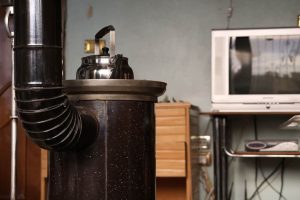
Gas tank units generally last 8 to 12 years. Electric tank units often run a year or two longer because they have no burner assembly, no flue, and fewer combustion-related failure points.
The tradeoff is that electric units heat slower and cost more to run in most of the state. Either way, the tank itself is the limiting part. Once the glass lining cracks and the steel underneath starts corroding, nothing you do brings it back.
Tankless Water Heaters
Tankless units last 15 to 20 years, and the Department of Energy puts the life expectancy at more than 20 years. There is no stored water sitting inside a steel tank corroding around the clock, which removes the single most common cause of failure.
The catch is maintenance. A tankless heat exchanger scales up in hard water, and skipping the annual descaling can cut a 20-year unit down to 12.
Heat Pump Water Heaters
Heat pump water heaters, sometimes sold as hybrid electric models, last around 10 to 15 years. They still have a storage tank, so they carry the same corrosion risk as a standard electric unit, plus a compressor that adds a second thing that can fail.
What you get in return is efficiency. They pull heat from surrounding air instead of generating it, which uses a fraction of the electricity a standard electric tank does. In an unfinished basement in Stoneham or Newton, they work well.
What Actually Determines Lifespan
Four things move the number more than the brand on the label:
- Water hardness. Minerals settle out as sediment, insulating the bottom of the tank and forcing the burner to work harder. Hard water is the single biggest lifespan variable in this region.
- Usage patterns. A four-person household with teenagers puts far more cycles on a unit than a retired couple.
- Maintenance history. A tank that has never been flushed and still has its original anode rod is on borrowed time by year eight.
- Install quality. Wrong sizing, no expansion tank where code requires one, poor venting, or sloppy connections all shorten the life of an otherwise good unit.
How to Find Your Water Heater’s Real Age
The manufacture date is on the rating plate, which is the metal or foil label on the side of the tank, usually near the top or beside the control panel. Bring a flashlight. Older labels fade badly.
Some manufacturers print the date outright. Most encode it in the serial number instead, and every brand does it differently. Here is how to read it:
- Find the serial number on the rating plate. Write down the full string, including letters.
- Look at the first four to six characters. Most brands hide the date there. A serial starting 1608 commonly means 2016, week or month 08. A serial beginning with a letter, like D14, often uses a letter for the month, with A as January, so D14 reads as April 2014.
- Confirm against the brand’s date code. Do not guess. Search the manufacturer name plus “serial number date code” and check the format against your unit. Manufacturers publish these lookups because plumbers and warranty departments need them daily.
- Cross-check with the warranty length. A 6-year tank that has outlived two warranty terms tells you what you need to know even if the serial is unreadable.
If the label is gone entirely, a technician can usually date the unit from the model series, the fittings, and the venting style.
7 Signs Your Water Heater Is Failing
- Rusty or discolored hot water. Brown or reddish water from the hot tap only means the tank is corroding internally. This one is rarely fixable.
- Rumbling or popping noises. Sediment has hardened on the tank bottom, and water is boiling underneath it. The tank is overheating in spots.
- Inconsistent water temperature. Hot, then cold, then hot again points at a failing heating element, thermostat, or dip tube.
- Any water around the base. A wet floor is not a small problem. Tank leaks do not seal themselves.
- Dropping hot water pressure. Sediment and scale narrow the outlet lines and restrict flow.
- Rising energy bills with no change in usage. An insulated layer of sediment forces longer burn cycles for the same amount of hot water.
- Age past 10 years. Even with nothing visibly wrong, a decade-old tank is running on reserve.
One sign on a young unit usually means a repair. Two or three on a unit past year ten means you are budgeting for a replacement, not a fix.
What to Do the Moment You Notice a Leak or Failure Sign
Shut off the energy source first, then the water. In that order. A tank that keeps heating while draining can overheat and damage components.
- Cut the power or gas. For electric units, switch off the dedicated breaker in your panel. For gas units, turn the gas control valve to the off position or close the shutoff valve on the gas line running to the heater.
- Close the cold water supply valve. It is the valve on the cold inlet pipe at the top of the tank. Turn it clockwise until it stops. If it is seized, shut off the main water valve for the house instead.
- Keep people away from standing water near electrical connections.
- Move anything of value off the floor and put down towels or a bucket if the leak is slow.
- Call for service. If it is after hours or the leak is active, our 24-hour emergency plumbing and heating team handles it the same day.
Knowing where those two valves are before an emergency saves you the worst part of the panic. Our emergency plumbing FAQs cover the rest of what to check when something goes wrong at 6 a.m.
Repair or Replace? How to Actually Decide
The 50% Rule, With a Real Example
If the repair costs more than half of a full replacement, replace the unit. Run your own numbers, not a rule of thumb.
Here is how the math works. Say your replacement quote for a comparable installed unit is $2,000, and the repair quote is $500. That repair is 25% of replacement, well under the line, so the repair makes sense. Now say the repair comes back at $1,200. That is 60% of replacement, and you would be spending most of the cost of a new unit to keep an old one alive.
Factor age into it. A $900 repair on a 4-year-old tank buys you eight more years. The same repair on an 11-year-old tank buys you an unknown amount of time on a component that is already past its expected service life.
When Repair Still Makes Sense (units under 6-8 years)
Repair when the unit is under 6 to 8 years old, the tank itself is sound, and the failed part is a serviceable component. Thermostats, heating elements, gas control valves, thermocouples, anode rods, and dip tubes are all standard repairs.
If it is the first repair on that unit and the tank shows no rust or seepage, fix it.
When Replacement Is the Smarter Call (10+ years, recurring repairs, tank leaks)
Replace when the unit is past 10 years, when you are on your second or third service call in two years, or any time the tank itself is leaking. A leaking tank is not repairable at any price.
Also replace when the unit is undersized for how you actually live now. If you added a bathroom or your household grew, running an old tank at full output every day is the reason it will fail early again.
Should You Upgrade When You Replace?
Replacement is the one moment when changing the system costs you almost nothing extra in labor. Most homeowners default to a like-for-like swap and skip the only easy opportunity they get for a decade.
Three upgrades worth pricing out:
- Resize the tank. Running out of hot water every morning means the unit is undersized, and a larger tank fixes a daily annoyance permanently.
- Go tankless. Endless hot water, a smaller footprint, and roughly double the service life. Higher upfront cost and it may require venting and gas line changes.
- Switch to a heat pump water heater. Significantly lower operating cost than standard electric, and it is the option Massachusetts incentives currently favor.
Ask for two quotes when you get an estimate. One for like-for-like, one for the upgrade you are curious about. The gap is usually smaller than homeowners expect.
What Massachusetts Homeowners Should Know
Mass Save, the statewide energy efficiency program funded by Massachusetts utilities, offers rebates on qualifying heat pump water heaters, and that changes the replacement math in this state. A unit that costs more upfront can land close to a conventional replacement after the rebate.
Rebate amounts, eligibility rules, and qualifying product lists change from year to year, so confirm current figures before you plan around them. Equipment generally has to be ENERGY STAR certified, on the current qualified products list, and installed by a registered contractor. Presidential Heating and Plumbing is a registered Mass Save contractor, so we can tell you what qualifies before you buy anything.
A few Massachusetts specifics worth knowing:
- Water heater work requires a licensed plumber or gas fitter, and installations need to be permitted and inspected in most municipalities.
- Thermal expansion tanks are commonly required on closed systems, which covers most homes with a backflow preventer or pressure-reducing valve.
- Older Stoneham and Newton housing stock frequently has undersized or non-compliant venting from earlier replacements, which surfaces during a swap.
Timing matters too. Replacing on your schedule in September beats replacing in an emergency in January, when demand is highest and you have no time to compare options.
How to Extend Your Water Heater’s Lifespan
- Flush the tank once a year. Draining a few gallons clears the sediment that causes overheating, noise, and efficiency loss.
- Replace the anode rod every 3 to 4 years. This is the sacrificial metal rod that corrodes so your tank does not. It is the cheapest way to add years to a tank, and it is the step nearly everyone skips.
- Keep water pressure between 40 and 60 psi. High incoming pressure stresses the tank and every fixture in the house. A gauge on an outdoor spigot tells you in seconds.
- Set the thermostat to 120 degrees. Hotter settings accelerate scale buildup and raise scald risk without much practical benefit.
- Book an annual inspection. A technician checks the anode, the T&P relief valve, venting, and connections in one visit, usually alongside your heating service.
If your water heater is past year ten, or you just found rust in the hot water this morning, get eyes on it before it decides for you. Presidential Heating and Plumbing has served Stoneham, Newton, and Northern Massachusetts for over 18 years, and someone actually answers the phone. Schedule an inspection or get a free quote, or call 781-279-1950 in Stoneham or 617-964-1950 in Newton.